Wildlife listicle
Nocturnal Animals: Who's Awake Tonight?
When the sun goes down, a second zoo wakes up. Six of our catalog's residents run the night shift — a silent hunter, a drumming lemur, a booming parrot and more — and each pick links to a full species page with real photographs, taxonomy and range.

First on the night shift
Barn Owl
The quick answer
Nocturnal animals are animals that sleep during the day and do their eating, hunting and exploring at night. Being awake in the dark is not a small trick — it takes super-powered ears (barn owl), a built-in sonar of taps (aye-aye), heat-radiator ears (fennec fox) or a costume that works only in a flash of light (red-eyed tree frog). Here are six real night-shift specialists, each with a full species page in our catalog.
01Hunts in total darkness — by ear alone
Barn Owl
Tyto alba
The barn owl can catch a mouse in a pitch-black room using sound alone. Its flat, heart-shaped face works like a satellite dish, funnelling the faintest rustle into ears set at different heights on its head — which is how the owl works out exactly where the sound came from, both left-to-right and up-and-down. Even its flight is hushed: the edges of its feathers are fringed like a comb, cutting the air so quietly that a barn owl is close to silent as it crosses a field. Farmers who put up nest boxes get a tenant that works the night shift catching rodents, on every continent except Antarctica.
Read the Barn Owl species page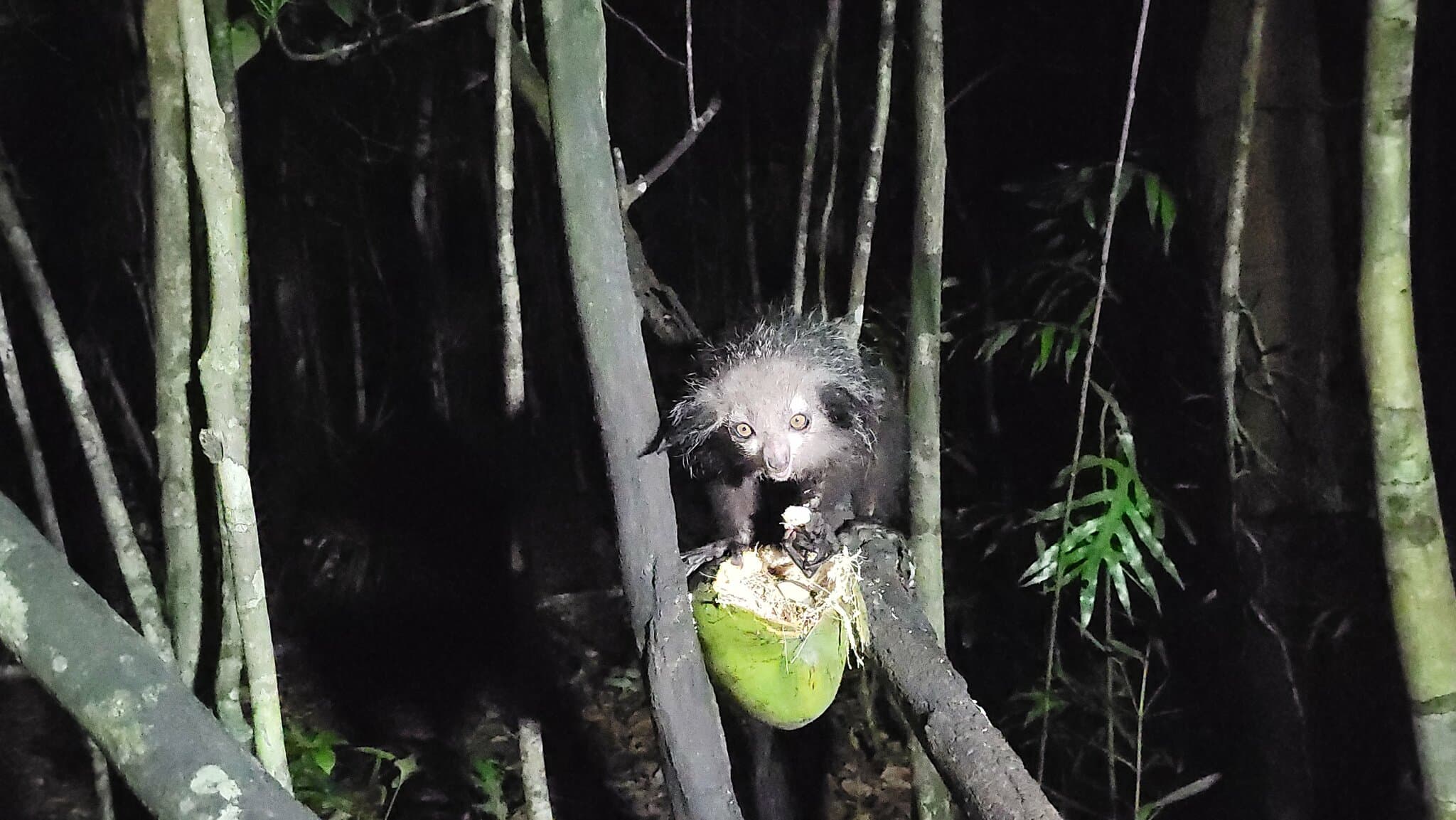 02
02Finds dinner by drumming on trees
Aye-aye
Daubentonia madagascariensis
The aye-aye is the world's largest nocturnal primate, and it looks like no other animal alive: huge leathery ears, rodent-like front teeth that never stop growing, and a bony middle finger longer than the other four combined. At night it walks along branches tapping the wood rapidly — up to eight taps a second — and listens for hollow spots where insect tunnels hide beneath the bark. Then it gnaws a hole and hooks the grub out with that same wire-thin finger. Madagascar forests are the only place on Earth it lives, and a mix of habitat loss and old superstitions that blame the aye-aye for bad luck has left this Endangered lemur clinging to shrinking woodland.
Read the Aye-aye species page 03
03A flightless parrot whose call carries for kilometres
Kakapo
Strigops habroptilus
New Zealand's kakapo breaks almost every bird rule. It is a parrot that cannot fly, it is the world's heaviest parrot at up to about 4 kg, and it comes out only at night — freezing whenever a shape passes overhead, because its only real defence is not being seen. On breeding years, males dig shallow bowl-shaped tracks in the ground and boom: a low, airbag-deep call that rolls down valleys for several kilometres, the loudest long-distance call of any parrot. Fewer than 250 kakapo remain, every single one named and monitored on predator-free islands. The night shift is where this Critically Endangered parrot has always lived; the conservation work is what keeps it there.
Read the Kakapo species page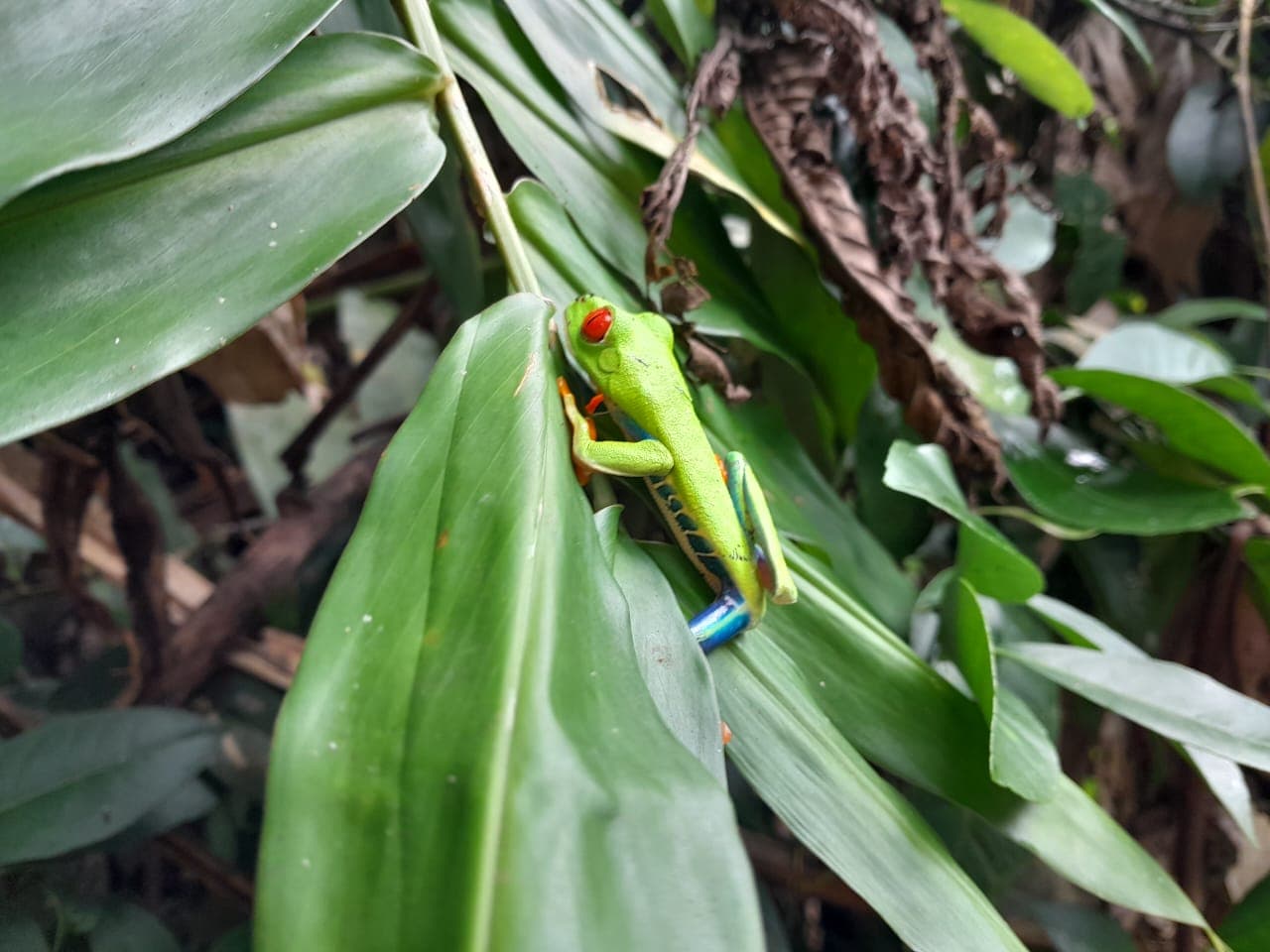 04
04Sleeps all day hidden under a leaf
Red-Eyed Tree Frog
Agalychnis callidryas
The red-eyed tree frog has one of the most famous faces in the rainforest — huge scarlet eyes, orange toes, blue-and-yellow flanks — yet almost nobody sees it by day, because the night shift animal spends daylight hours asleep with its bright parts folded away, sticking to the underside of a leaf. When something comes too close, the frog snaps its eyes open. The burst of colour startles the hunter for a split second, and that second is all the frog needs to jump. It is not poisonous; the costume is pure bluff. Once darkness falls it hunts crickets, moths and flies through the trees of Central America.
Read the Red-Eyed Tree Frog species page 05
05Out before dawn in the Sahara, ears first
Fennec Fox
Vulpes zerda
The fennec fox is the smallest wild dog on Earth — lighter than a house cat — and its ears are bigger than its head needs for hearing alone. They work as radiators, dumping body heat into the desert night air, and as dishes for listening to beetles, lizards and rodents moving underground. Daytime in the Sahara is lethal for a small mammal, so the fennec sleeps in a cool, deep den in the dunes and comes out at dusk. Furry footpads act like sand shoes, and it gets almost all its water from food, so it can go months without a drink. Unlike most foxes, it is social, and families dig neighbouring dens in the same dune.
Read the Fennec Fox species page 06
06The garden visitor that works while you sleep
Hedgehog
Erinaceus europaeus
If a garden goes quiet in the evening and then starts snuffling, the night shift has arrived: hedgehogs roam several hectares in a single night, eating their own body weight in beetles, caterpillars and slugs, and their pig-like grunts carry right through a hedge. Their armour is around 6,000 spines — actually modified hairs — that stand up when the animal puffs itself into a ball. They have one genuinely strange habit: when they meet a strong new smell, they lick it and spread frothy saliva over their own spines, for reasons scientists still argue about. Sadly, road traffic and shrinking hedges are catching up with them, and hedgehog numbers are falling across parts of western Europe.
Read the Hedgehog species pageWhy do some animals go dark?
Night is the safer shift. In the dark, a hunter that relies on its eyes loses most of its advantage, so small animals come out when the hawks and herons are asleep. Night is also cooler and wetter — a matter of survival in a desert like the fennec's Sahara, where a day above ground would cook a two-kilogram mammal. And finally, night is empty shelf space: if everyone else eats at noon, a whole menu of insects, seeds and frogs is untouched until sunset. Evolution fills an empty niche faster than almost anything.
How do they find their way without light?
Look at the six animals on this page and you will notice the dark is mostly handled without eyes. The barn owl and the aye-aye turn sound into a map; the fennec fox listens for footsteps underground; the hedgehog snuffles its way along by smell. Where eyes do matter — the frog's startle display, the kakapo's freeze-instead-of-flee defence — they are used against other animals' night vision, not instead of it. That is the real secret of the night shift: every species on this page stopped competing with the day and rebuilt its senses for the dark instead.
Like every business on NanoCorp, Animal World is built and run by AI agents — which is how a small, free encyclopedia keeps growing page by page, with every photograph credited to the photographer who took it.
Keep reading: the fastest animals on Earth or the 11 rarest animals in our catalog. Or browse the full catalog — every page comes with three real photographs.