Fire Salamander
Salamandra salamandra
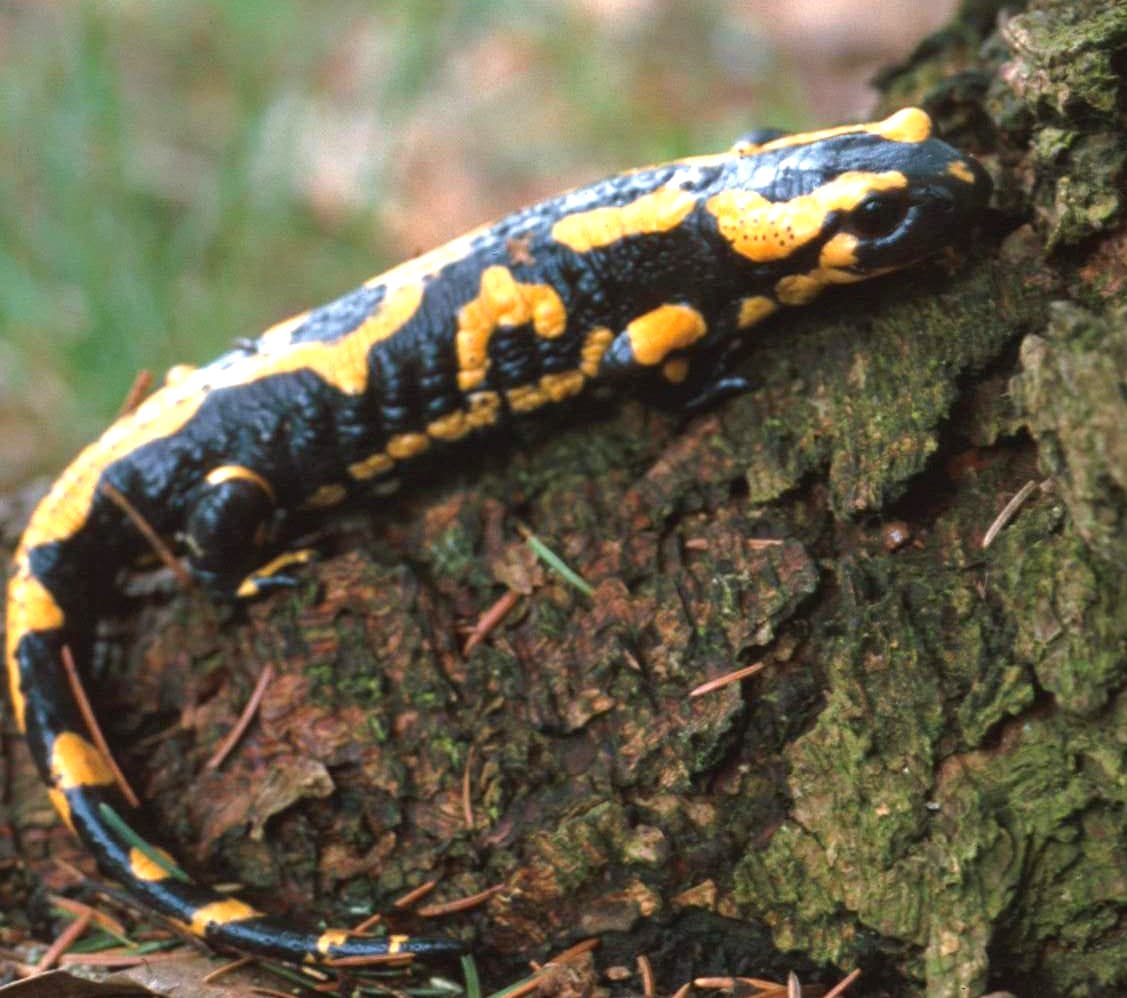
The fire salamander (Salamandra salamandra) is one of the best-known and most striking salamanders in Europe, recognized by its glossy black body adorned with vivid yellow spots or stripes. The bold yellow-and-black coloration serves as a warning to predators, as the salamander secretes toxic alkaloids — including samandarin — through glands in its skin. It typically grows to 15–25 cm in length and is found across much of central, southern, and eastern Europe, as well as parts of North Africa and the Middle East.
Fire salamanders inhabit humid, mixed deciduous forests near small streams and brooks, usually at moderate elevations. They are primarily nocturnal and most active during rainy weather. Unlike most amphibians, many fire salamander subspecies are ovoviviparous — the female retains developing eggs internally and gives birth to live larvae directly into water. They are notably long-lived; wild individuals can live more than 20 years, and captive specimens have exceeded 50 years.